How to Find Returns with Dividends: Best Stock Return Calculator
Investors often look at stock prices when evaluating performance. Yet many miss a major part of total returns: dividends. Dividends can boost long-term gains, reduce risk, and offer a steady income stream. Understanding how to find returns with dividends helps you measure the real value of an investment. It also helps you compare dividend-paying stocks more accurately.

Table of Contents
Dividend income is simple in concept. A company distributes part of its profits to shareholders. But calculating the total return from dividends, including price changes, requires a structured approach. This guide explains how to measure these returns in a clear and practical way.
Understanding Total Return from Dividends
Total return tells you how much you earned from a stock. It includes two parts. The first part is capital gains. That is the price change in the stock. The second part is the cash dividends you received. Combining both gives a true measure of performance over time.
The Basic Total Return Formula
A simple way to find total return is:
Total Return = (Price Gain + Dividends Received) ÷ Initial Investment
This helps show the complete picture. If you only look at the stock price, you might underestimate the investment’s performance. Experience our user-friendly online tool now dividend stock calculator
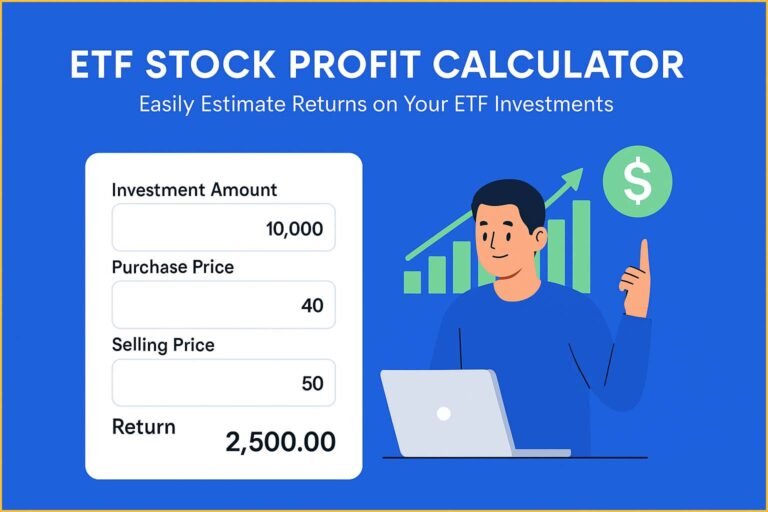
Stock Return Calculator
Stock Return Calculator
Calculate profit, ROI, and annualized return for stock investments with detailed breakdowns.
– Enter purchase price per share, number of shares, and purchase commission.
– Enter selling price per share, selling commission, holding period in years, and any dividends received.
– Click “Calculate” to see total invested, proceeds, net profit, ROI (%), and annualized return (CAGR).
– Formula used: Invested = (buyPrice × shares) + buyCommission
Proceeds = (sellPrice × shares) − sellCommission + dividends
Profit = Proceeds − Invested
ROI = Profit ÷ Invested
CAGR = (Proceeds ÷ Invested)1/years − 1
– This calculator assumes dividends are included in proceeds. Adjust inputs accordingly.
Formula check: ROI and CAGR are double‑checked. ROI = (Profit ÷ Invested). CAGR = (Final ÷ Initial)^(1/years) − 1. Commissions and dividends are included for accuracy.
Why Dividend Returns Matter
Dividends matter because they provide cash even when markets are flat. Historically, dividends have contributed a large share of total stock market returns. They also signal financial strength because companies that pay regular dividends often have stable earnings. This makes them popular among long-term investors.
Use our web-based tool for fast and reliable calculations stock leverage calculator
How to find Returns with Dividends Step-by-Step
Below is a simple step-by-step method that anyone can follow.
Step 1: Determine Your Initial Purchase Price
Start with the price you paid per share. Multiply it by the number of shares. This becomes your total initial investment.
Step 2: Add Up All Dividends Received
Companies usually pay dividends quarterly. Add all dividend payments per share for the year and multiply them by your share count. This gives your total dividend income.
Step 3: Calculate the Stock’s Price Change
Subtract your purchase price from the current price. Multiply that result by your share count. This shows your capital gains or losses.
Step 4: Use the Total Return Formula
Now insert your numbers into the total return formula. This will give you a percentage return that includes both price appreciation and dividend income.
Calculate instantly with our smart online tool profit option calculator
Total Return with Dividends Example
Here is a simple example to make the concept clearer.
Example Data Table
| Item | Amount |
|---|---|
| Purchase Price per Share | $50 |
| Current Price per Share | $58 |
| Shares Owned | 100 |
| Annual Dividend per Share | $1.50 |
Step-by-Step Calculation
1. Initial Investment
100 shares × $50 = $5,000
2. Dividends Received
100 shares × $1.50 = $150
3. Price Gain
($58 − $50) × 100 = $800
4. Total Return
($800 + $150) ÷ $5,000 = 19%
This result shows how dividends raise your total return. Without dividends, the return would drop to 16%. The dividend income adds a meaningful boost.
Explore our online tool for quick and accurate results margin call calculator
Key Metrics for Evaluating Dividend Returns
When researching how to find returns with dividends, several metrics help you compare options. Each reveals a different angle of dividend performance. Try our free online tool today s&p 500 index fund calculator uk
Dividend Yield
Dividend yield measures annual dividend income as a percentage of the stock price. It is:
Dividend Yield = Annual Dividend ÷ Stock Price
This helps you find income-focused investments. However, a very high yield can signal financial trouble, so it should be considered carefully.
Dividend Payout Ratio
The payout ratio shows how much of a company’s earnings go toward dividends. A sustainable payout ratio often ranges between 30% and 60%. If a company pays too much, it may struggle to reinvest in growth.
Dividend Growth Rate
This tells you how fast a company increases its dividends each year. Long-term dividend growth is a strong signal of quality and stability. Investors who focus on growing dividends often enjoy higher future returns.
How Dividend Reinvestment Boosts Returns
Dividend reinvestment plans, often called DRIPs, allow investors to reinvest dividends back into the same stock. This increases the share count automatically. Over time, this creates compounding growth. Compounding is powerful because new shares also earn dividends, causing returns to accelerate over the long run. Access our powerful online calculator instantly s&p 500 index calculator uk
Example of Compounding Impact
Assume you own 200 shares and earn $300 in dividends. If you reinvest that $300, you buy more shares. The next year, those additional shares will earn dividends too. This cycle continues every year, boosting total returns beyond simple income.
Factors That Influence Dividend Returns
Several factors affect the returns you earn from dividend-paying stocks.
Company Performance
Strong revenue and profit growth help a company pay and raise dividends. Stable industries such as utilities, telecom, and consumer goods tend to offer reliable dividends.
Market Conditions
Economic cycles influence dividend returns. In uncertain markets, dividends become more valuable because they provide steady income even when prices fluctuate. Get started with our easy-to-use online tool best cfd trading calculator
Dividend Policy
Some companies prioritize paying dividends. Others prefer to reinvest profits. Review a company’s dividend history to understand its consistency and reliability.
Final Thoughts on How to Find Returns with Dividends
Knowing how to find returns with dividends helps you make better investment decisions. Dividends can strengthen your portfolio, reduce volatility, and accelerate returns through reinvestment. By calculating total return properly and using the right metrics, you can evaluate dividend-paying stocks with confidence.
Dividend investing is not only about income. It is about understanding the full value an investment provides. With clear calculations and consistent tracking, you can uncover the true performance of your portfolio and build long-term wealth more effectively.
Follow Finance ToolKit on LinkedIn for new finance tools and tips for investments.
#DividendReturns, #StockReturnCalculator, #DividendInvesting, #InvestmentReturns, #DividendYield, #StockMarketAnalysis, #TotalReturnCalculator, #PassiveIncomeInvesting, #PortfolioGrowth, #LongTermInvesting