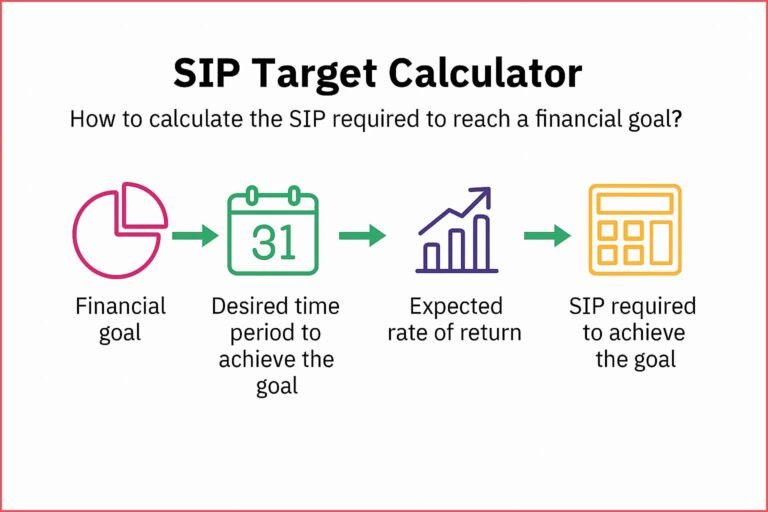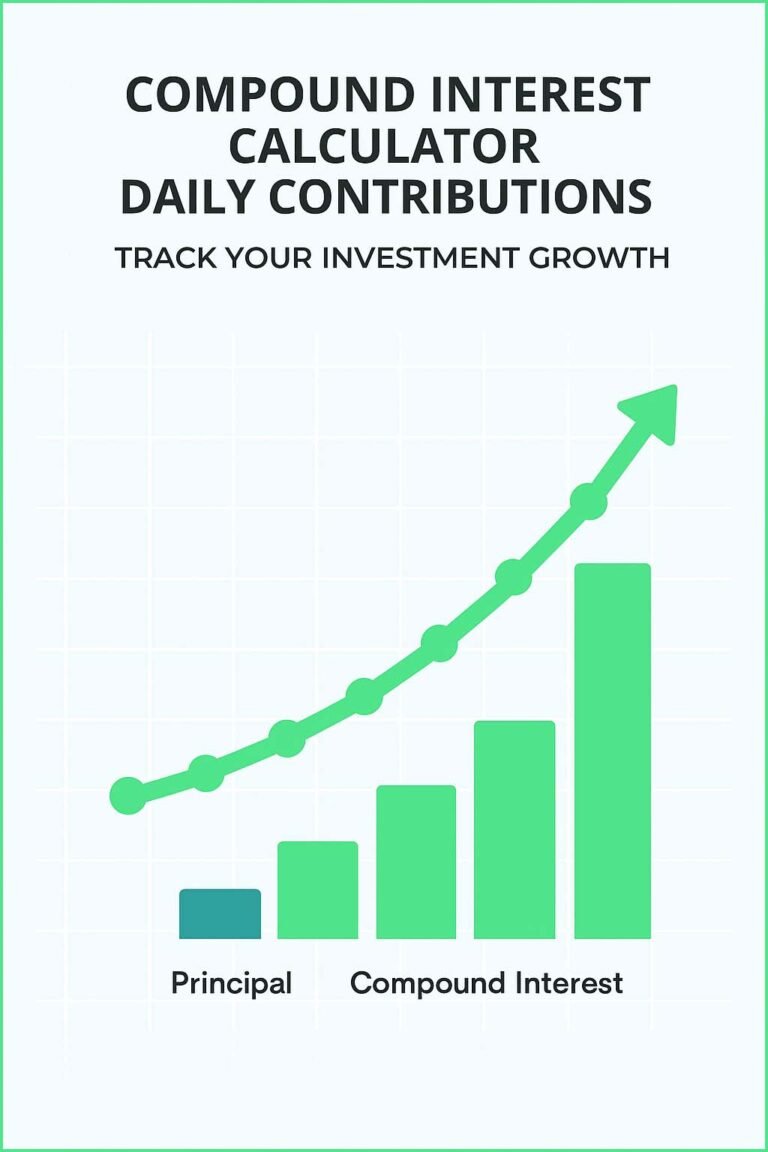
How Much Is the Monthly SIP Investment and Expected Returns? Monthly SIP Calculator
A monthly SIP investment is one of the easiest ways to build long-term wealth. Many people wonder how much they should invest each month and what returns they can expect over the years. The answer depends on your income, financial goals, risk appetite, and investment duration. With steady contributions and the power of compounding, even a small monthly SIP can grow into a strong financial cushion.
Table of Contents
A SIP lets you invest a fixed amount in mutual funds every month. It builds discipline and protects you from market timing. Whether your goal is retirement planning, building wealth, education funds, or long-term financial freedom, a monthly SIP investment helps you stay consistent and focused.
How Much Should You Invest in a Monthly SIP?
There is no fixed monthly amount for everyone. Your monthly SIP investment should match your comfort level and long-term financial plans. Many investors begin with $20 to $50 per month, while others invest $100 to $500 or more.
A practical approach is the 50-30-20 rule, where 20% of your income should go toward savings and investments. If someone earns $2,500 monthly, they can allocate around $500 to investments. This amount can be divided into multiple SIPs.
Choose an SIP amount that you can continue comfortably every month. SIPs work best when they remain uninterrupted. If your income increases yearly, a step-up SIP can boost your long-term wealth. Increasing your SIP by even 5% or 10% annually creates a much larger corpus. Start using our online solution for instant results xrp calculator
Monthly SIP Calculator
Monthly SIP Calculator
Plan and compare monthly SIP outcomes with net returns after TER, step‑up contributions, fees, inflation view, and yearly schedule. Built for engagement and accuracy.
– Enter lump sum, monthly SIP, years, expected return, TER, SIP timing, and optional loads. Add a yearly step-up for contributions if desired.
– Set inflation to see real-value outputs; choose a currency for display. Use scenario presets for quick comparisons, then fine-tune.
– Click “Calculate” to view invested cash, maturity value, net gain, CAGR, real (inflation-adjusted) return, and a yearly schedule. Toggle SIP timing and step-up to see impact instantly.
– Use the schedule to compare scenarios and validate assumptions. Actual performance varies; fees and loads affect net returns.
Formula checks:
– Net rate: r_net = max(0, r_exp − TER). Monthly effective i_m = (1 + r_net)^(1/12) − 1.
– Lump sum FV: FV₀ = P₀·(1 + i_m)^(N), N = 12·t.
– Level SIP FV (end): FV_SIP = PMT·[((1 + i_m)^N − 1)/i_m]. If SIP at start (annuity due): multiply by (1 + i_m).
– Step-up SIP: PMT_y = PMT₀·(1 + s)^(y−1). Sum yearly annuity blocks with remaining months and monthly i_m.
– Exit load at maturity: FV_net = (FV₀ + FV_SIP_total)·(1 − exit). Front load reduces each contribution: amount_invested = raw·(1 − front).
– CAGR = (FV_net / totalCash)^(1/t) − 1. Real CAGR: (1 + CAGR)/(1 + inflation) − 1.
Expected Returns from Monthly SIP Investment
Expected returns vary based on the type of mutual fund you select. Equity funds offer higher returns but come with more volatility. Debt funds offer stability but lower growth. Hybrid funds lie between the two.
Expected Returns Table
| Fund Type | Risk Level | Expected Annual Return Range |
|---|---|---|
| Equity Funds | High | 10% to 15% |
| Hybrid Funds | Medium | 8% to 12% |
| Debt Funds | Low | 5% to 8% |
These ranges represent long-term averages. Returns for an SIP are commonly measured through the XIRR method, which considers monthly investments and market movements.
How to Calculate SIP Returns
The most widely used expression to calculate the future value of a SIP is both simple and powerful.
Future Value of SIP
The formula written in an aesthetic and readable format is:
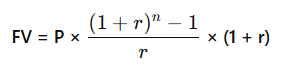
Where:
P = Monthly SIP amount
r = Monthly return rate
n = Total number of months
This formula highlights how compounding works. The longer you invest, the greater the acceleration in wealth. Try our free online tool today s&p 500 index fund calculator uk
Examples of Monthly SIP Investment and Future Value
Let’s assume an annual return of 12%. This means a monthly rate of:
r = 12% ÷ 12 = 1% = 0.01
Below is the future value of different SIP amounts in USD.
SIP Growth Table (Assuming 12% Annual Returns)
| Monthly SIP | 10 Years ($) | 15 Years ($) | 20 Years ($) |
|---|---|---|---|
| $20 | $4,600 | $9,600 | $19,800 |
| $50 | $11,500 | $24,000 | $49,500 |
| $100 | $23,000 | $48,000 | $99,000 |
| $200 | $46,000 | $96,000 | $198,000 |
These numbers reflect the strength of compounding. Even small monthly SIPs grow significantly when invested for a long duration. Explore our online tool for quick and accurate results margin call calculator
Choosing the Right Monthly SIP Investment Amount
Before selecting your SIP amount, consider the following factors.
Your Financial Goal
Different goals require different investment amounts. Long-term goals like retirement may require higher SIPs. Short-term goals like buying a gadget need smaller contributions.
Investment Horizon
Longer horizons reduce risk and improve average returns, especially in equity funds. SIPs invested for 7 years or more perform more consistently.
Risk Appetite
If you can handle market swings, equity funds offer better long-term wealth creation. If you want stability, hybrid or debt funds suit you better.
Benefits of Monthly SIP Investment
Monthly SIPs offer multiple advantages to new and experienced investors. Calculate instantly with our smart online tool profit option calculator
Dollar-Cost Averaging
When the market drops, you buy more units. When the market rises, you buy fewer units. Over time, this reduces your average purchase price.
Flexibility and Freedom
SIPs can be started with small amounts. You can pause, increase, or switch them as your financial strategy evolves.
Power of Compounding
Compounding generates exponential growth, especially for long-term SIPs. Your returns begin to produce more returns.
Less Emotional Stress
Since the investment is automated, you do not need to monitor markets daily. This builds consistency and reduces emotional decisions.
How to Increase SIP Returns
Here are simple practices that improve long-term SIP outcomes. Use our web-based tool for fast and reliable calculations stock leverage calculator
Step-Up SIP
Increasing your SIP every year helps you stay ahead of inflation and boosts long-term results.
Select High-Quality Funds
Choosing funds with strong track records, good portfolio allocation, and consistent fund management leads to stronger SIP performance.
Stay Invested During Volatile Markets
Never stop SIPs when the market fluctuates. Market recoveries deliver strong gains, especially for equity SIPs.
Review Performance Annually
A yearly review helps ensure your funds remain aligned with your goals. If a fund underperforms consistently, switching can protect returns. Experience our user-friendly online tool now dividend stock calculator
How Much Expected Return Can a Monthly SIP Realistically Generate?
A long-term equity SIP can create wealth far beyond your total investment. For example:
- A $100 monthly SIP for 20 years at 12% can grow to nearly $99,000.
- Your total investment is $24,000, and the remaining amount is pure compounding growth.
Similarly, a $50 monthly SIP for 15 years grows to $24,000, while your actual investment is only $9,000.
This demonstrates how important consistency and time are in SIP investing.
Take advantage of our free, accurate online tool brokerage margin calculator
Final Thoughts
A monthly SIP investment is one of the most effective and flexible financial planning tools. You can start with any amount, increase it as your income grows, and stay invested for long-term goals. Expected returns depend on the fund category, market performance, and your investment horizon.
Understanding SIP amount planning, expected returns, and the future value formula helps you make confident decisions. Whether you are just beginning or already investing, a monthly SIP investment provides clarity, structure, and long-term wealth creation. Make your task easier with our online calculator option selling profit calculator
Follow Finance ToolKit on LinkedIn for new finance tools and tips for investments.
#SIPInvestment, #MonthlySIP, #SIPReturns, #MutualFundsSIP, #FinancialPlanning, #WealthBuilding, #InvestSmart, #PersonalFinanceTips, #LongTermInvestment, #InvestmentGuide