Capital Gains Tax Calculator – Estimate Your Tax on Investment Profits Instantly
A capital gains tax calculator is one of the most essential tools for investors, homeowners, and traders who want to know how much tax they owe when selling an asset. Whether you are selling stocks, real estate, or cryptocurrency, calculating capital gains correctly helps you plan your finances and avoid unexpected tax liabilities. This article explains everything about the capital gains tax calculator, how it works, the difference between short-term and long-term gains, and how you can use it to make smarter investment decisions.

Table of Contents
What Is a Capital Gains Tax Calculator?
A capital gains tax calculator helps estimate the tax payable on the profit earned from selling an investment or asset. When you sell something for more than you paid for it, the difference is your capital gain. Governments apply a tax on that profit, known as the capital gains tax. This calculator quickly determines how much of your gain will be taxed based on the type of asset, how long you held it, and your income bracket.
Use our online tool Stock Margin Calculator: Estimate Your Margin Requirements Accurately
Investors often use a capital gains tax calculator before selling an asset. It helps them understand the after-tax return on their investment and decide the best time to sell. For example, holding an investment for more than a year might reduce the tax rate, turning short-term gains into long-term ones.
Capital Gains Tax Calculator
Estimate your capital gains tax liability based on asset sale details and applicable tax rates.
Enter the purchase and sale price per unit, number of units, fees, holding period, and applicable tax rate. Click “Calculate” to view your total gain, taxable amount, CGT liability, and net proceeds. Use this to plan asset sales and estimate tax impact.
How Does a Capital Gains Tax Calculator Work?
The capital gains tax calculator takes a few basic inputs and returns your estimated tax. These include:
- Purchase price – The amount you originally paid for the asset.
- Selling price – The amount you received when you sold it.
- Date of purchase and sale – These help determine how long you owned the asset.
- Your income bracket – Since tax rates depend on income levels, this is crucial.
- Applicable deductions or exemptions – Some assets qualify for tax relief.
Once you input these details, the calculator determines whether your gain is short-term or long-term and applies the correct tax rate.
Short-Term vs Long-Term Capital Gains
The holding period of your asset is the key factor that determines the tax rate.
| Type of Gain | Holding Period | Tax Rate | Common Example |
|---|---|---|---|
| Short-Term Capital Gain | Less than 12 months | Taxed at ordinary income tax rate | Stock held for 6 months |
| Long-Term Capital Gain | More than 12 months | Lower tax rate | Real estate held for 3 years |
Short-term capital gains are usually taxed at the same rate as your regular income. Long-term gains, however, benefit from lower tax rates, encouraging investors to hold assets for longer periods.
A capital gains tax calculator automatically distinguishes between the two types once you enter the purchase and sale dates.
Use our online tool Dividend Yield Calculator – A Simple Tool to Estimate Your Dividend Income
Why Use a Capital Gains Tax Calculator?
Using a capital gains tax calculator offers several benefits for investors and taxpayers.
First, it gives you accurate estimates of your potential tax before selling an asset. This helps with planning the sale for a time when your tax liability may be lower.
Second, it helps investors compare the impact of different investment decisions. For example, you can check whether selling now or holding for a few more months will reduce your overall tax bill.
Finally, the calculator helps ensure compliance with tax laws. Misreporting capital gains can lead to penalties, but an accurate calculator keeps your records consistent and clear.
Example Calculation Using a Capital Gains Tax Calculator
Let’s understand how this works with a simple example.
| Description | Amount |
|---|---|
| Purchase Price | $10,000 |
| Selling Price | $15,000 |
| Capital Gain | $5,000 |
If you held the asset for more than 12 months, the gain is long-term. Suppose the long-term capital gains tax rate is 15%.
Tax Payable = $5,000 × 15% = $750
Your net profit after tax would be $4,250.
A capital gains tax calculator performs this calculation instantly. It also allows you to change tax rates, holding periods, or income levels to see how these factors affect your final tax amount.
Use our online tool Options Profit Calculator – Estimate Your Option Trade Returns Instantly
Capital Gains on Different Assets
Capital gains tax applies differently depending on the type of asset. Let’s see how it varies.
1. Stocks and Mutual Funds
When you sell shares or mutual funds for more than you paid, the profit is subject to capital gains tax. Short-term gains are taxed at ordinary income rates, while long-term gains are taxed at a reduced rate.
2. Real Estate
Capital gains from selling a property can be significant. However, if you have lived in the property for at least two of the last five years, you may qualify for a primary residence exemption, which can reduce or eliminate tax. A capital gains tax calculator helps include these exemptions easily.
3. Cryptocurrency
Cryptocurrency is also subject to capital gains tax. Whether you trade Bitcoin, Ethereum, or any other crypto asset, each sale or exchange can trigger a taxable event. A crypto investor often relies on a capital gains tax calculator to track multiple transactions.
4. Business Assets
When businesses sell fixed assets like machinery or land, they may face capital gains tax. Using a calculator simplifies complex accounting by determining taxable profits quickly.
Factors That Affect Capital Gains Tax
Several factors influence the final tax amount calculated by a capital gains tax calculator:
- Holding period – Longer holding periods usually result in lower tax rates.
- Type of asset – Real estate and collectibles may have different tax rules.
- Your total income – Higher income may push you into a higher tax bracket.
- Deductions and exemptions – Certain exemptions can significantly reduce tax liability.
- Inflation indexation – Some countries allow adjusting the purchase price based on inflation to reduce the taxable gain.
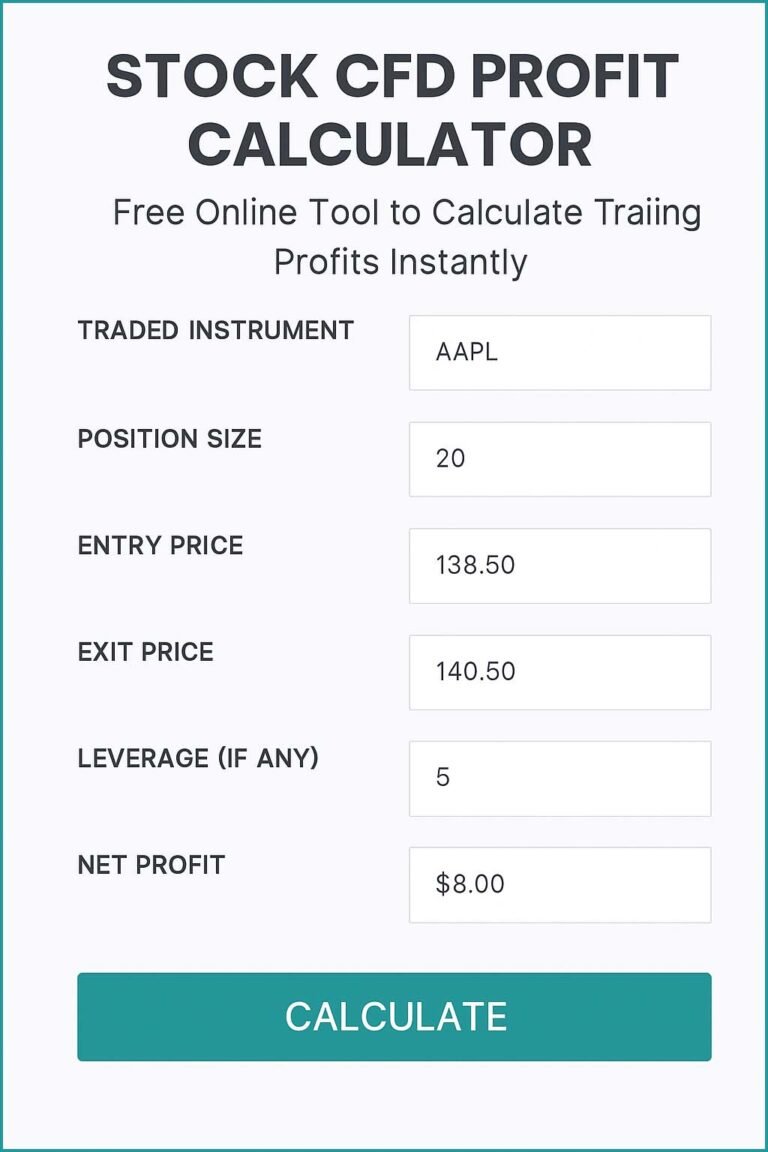
Use our online tool Stock CFD Profit Calculator – Free Online Tool to Calculate Trading Profits Instantly
How to Reduce Capital Gains Tax Legally
A capital gains tax calculator helps you plan strategies to reduce taxes. Some effective methods include:
- Holding assets longer to qualify for long-term rates.
- Offsetting losses by selling investments that have declined in value.
- Reinvesting profits through specific schemes or retirement accounts.
- Claiming exemptions available for primary residences or business reinvestments.
These strategies, when combined with accurate calculation, help improve your overall returns.
Common Mistakes People Make When Calculating Capital Gains
Many people make errors while computing capital gains manually. They forget to include brokerage fees, transaction costs, or adjustments for inflation. These mistakes can lead to either overpayment or underpayment of tax.
Using a capital gains tax calculator eliminates these errors. It ensures you include all relevant costs, giving an accurate net gain figure.
Capital Gains Tax Calculator for Different Countries
The tax rules differ depending on where you live.
| Country | Long-Term Tax Rate | Short-Term Tax Rate | Notes |
|---|---|---|---|
| United States | 0–20% based on income | Taxed as regular income | Includes state taxes |
| United Kingdom | 10–20% | Taxed at income rate | Depends on income threshold |
| Canada | 50% of gain taxable | Same as ordinary income | Applies to residents and non-residents |
| Australia | 50% discount for assets held >12 months | Full inclusion | Exemptions for main residence |
A global capital gains tax calculator allows users to select their country and apply regional tax rules automatically.
Why Capital Gains Tax Calculators Are Essential for Investors
Every investor should understand their tax position before selling an asset. Taxes can take a large portion of your profit if you don’t plan ahead.
A capital gains tax calculator not only gives clarity but also helps make strategic decisions. For example, you can test different scenarios—like selling half your holdings, delaying the sale, or reinvesting profits—to see which option yields the highest after-tax return.
It’s not just about tax compliance. It’s about maximizing your profit efficiently and legally.
Use our online tool Stock Profit Calculator Canada: Estimate Your Stock Gains Instantly Online
Final Thoughts on the Capital Gains Tax Calculator
A capital gains tax calculator is more than a simple computation tool—it’s a financial planning assistant. It allows you to visualize how much tax you owe and how your investment choices impact your final income.
Whether you are an investor in stocks, property, or cryptocurrency, using this calculator can save time, avoid errors, and provide peace of mind. It empowers you to make informed financial decisions, optimize your portfolio, and keep more of your profits.
In today’s fast-paced investment world, accurate tools matter. The capital gains tax calculator simplifies complex tax calculations and helps you stay in control of your financial future.
Follow Finance ToolKit on LinkedIn for new finance tools and tips for investments.
#CapitalGainsTaxCalculator, #InvestmentTax, #CapitalGains, #TaxCalculator, #FinanceTools, #InvestmentReturns, #TaxPlanning, #InvestmentProfits, #FinancialCalculator, #PersonalFinance, #UKTaxCalculator, #IncomeTax, #WealthManagement, #StockMarketTax, #OnlineTaxCalculator